

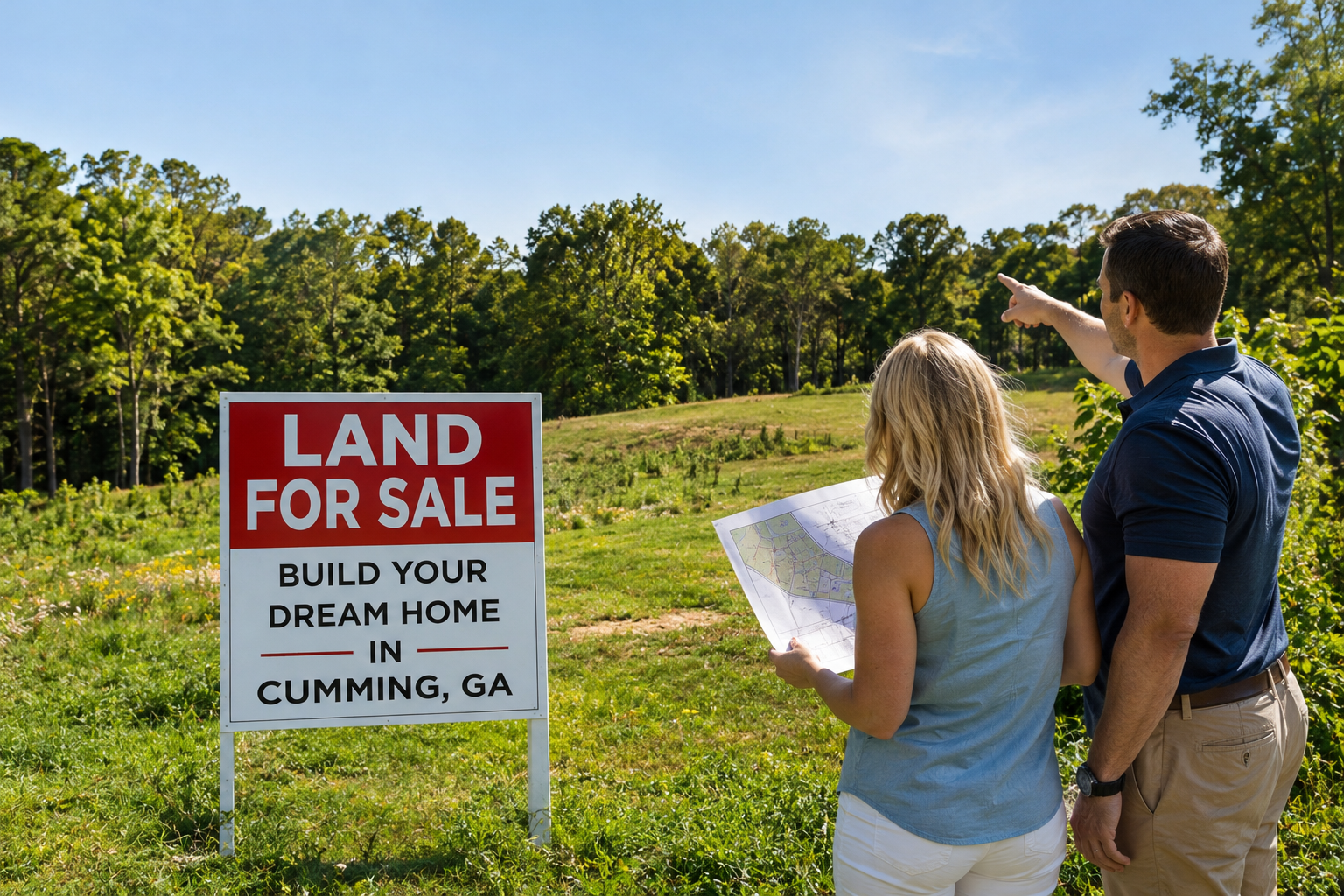

Share this article

What to Look for When Buying Land to Build a Home in Cumming, GA

November 13, 2026

Before buying land for a custom home in Cumming, GA, investigate more than the location and asking price. Zoning, setbacks, utilities, soil conditions, drainage, topography, access, easements, and site-development costs can determine whether a lot actually works for the home you want to build.

A beautiful property can become an expensive construction site if major issues are discovered after closing. For homeowners planning custom construction in Cumming or the surrounding North Georgia area, involving an experienced builder early can help identify potential challenges before architectural plans and construction budgets are finalized.

Here are the most important factors to evaluate.

Why the Right Lot Matters When Building a Custom Home

Your building site influences nearly every part of a custom home project.

The property can affect:

  • Home orientation
  • Foundation design
  • Driveway placement
  • Basement options
  • Outdoor living areas
  • Utility connections
  • Grading
  • Drainage
  • Landscaping
  • Privacy
  • Construction access
  • Overall project cost

Two lots with the same acreage and similar purchase prices can have dramatically different development costs.

A relatively straightforward site may require limited preparation, while another property could require extensive clearing, grading, retaining systems, utility work, or specialized foundation solutions.

This is why the cheapest land isn't necessarily the least expensive place to build.

Internal Linking Opportunity: [New Home Construction – https://www.gbhbs.com/]

1. Confirm the Property's Zoning

One of the first questions to investigate is whether local zoning allows the type of home you want to build.

Zoning can affect matters such as:

  • Permitted residential uses
  • Building location
  • Minimum lot requirements
  • Building height
  • Accessory structures
  • Density
  • Other development restrictions

Don't assume that because nearby properties have large homes, your specific parcel automatically allows the same type of construction.

Rules can vary based on the property's jurisdiction and zoning classification.

If you are evaluating land in or around Cumming, determine whether the parcel is within the City of Cumming or unincorporated Forsyth County because the applicable local processes may differ.

2. Understand Building Setbacks

Owning a large parcel does not mean you can build anywhere on it.

Setbacks establish required distances between structures and certain property boundaries or other regulated areas.

Depending on the site, setback requirements can affect the front, rear, and sides of the property.

The practical result is a buildable area that may be considerably smaller than the total lot.

This becomes especially important when planning:

  • Wide custom homes
  • Side-entry garages
  • Pools
  • Detached garages
  • Large patios
  • Outdoor kitchens
  • Future additions

Before purchasing land, make sure the buildable portion can accommodate not only the house but also the exterior features you want.

3. Research Easements

An easement gives another party certain rights to use part of a property for a specific purpose.

Examples can include easements for:

  • Utilities
  • Drainage
  • Access
  • Roads
  • Shared driveways

An easement can restrict where structures or other improvements may be placed.

Review the property's survey, title information, and relevant recorded documents with qualified professionals before purchasing.

A visually empty section of land is not necessarily available for construction.

4. Evaluate the Topography

North Georgia's terrain can create beautiful home sites, but slopes can also add construction complexity.

A sloping property might be ideal for:

  • Walkout basement
  • Elevated deck
  • Lower-level patio
  • Scenic views
  • Multilevel landscaping

However, significant elevation changes may also require additional site work.

Potential considerations include:

  • Excavation
  • Grading
  • Retaining structures
  • Foundation design
  • Drainage systems
  • Driveway slope
  • Construction equipment access

Rather than viewing a slope as automatically good or bad, determine how it affects the specific house you intend to build.

A builder can help evaluate whether your desired floor plan complements the site.

5. Investigate Soil and Site Conditions

The ground beneath a custom home is just as important as the finishes inside it.

Site and soil conditions can affect foundation design, drainage, septic feasibility, and other construction decisions.

Depending on the property and proposed project, qualified professionals may need to evaluate the site before construction.

Potential concerns can include:

  • Poorly draining soils
  • Unstable fill
  • Rock
  • Erosion
  • High groundwater
  • Areas unsuitable for certain development

For properties requiring an onsite septic system, soil evaluation can be particularly important.

Do not rely solely on how the land looks from the road.

6. Determine Whether Sewer or Septic Will Be Used

Wastewater service can have a major impact on land planning.

If public sewer service is available, determine where the connection is located and what may be required to connect the property.

If the property requires a septic system, investigate whether the site can support an appropriate system for the planned home.

A septic system can affect where you place:

  • The house
  • Driveway
  • Pool
  • Outdoor living spaces
  • Future additions
  • Landscaping features

This is especially important when designing a large custom home with multiple bedrooms.

Verify the property's wastewater options before committing to a final home layout.

7. Check Water Availability

Determine how the home will receive water.

Depending on location, the property may use a public water system or require another approved water source.

Questions to investigate include:

  • Is public water available?
  • Where is the nearest connection?
  • What connection requirements apply?
  • Will the property require a well?
  • What site considerations apply to a well?

Utility availability should be verified rather than assumed because neighboring properties may not necessarily have identical conditions.

8. Research Electricity, Gas, and Internet Access

Homeowners often focus on water and sewer but overlook other utilities.

Before purchasing a rural or less-developed North Georgia property, investigate access to:

  • Electricity
  • Natural gas, if desired and available
  • Internet service
  • Telecommunications

If utility infrastructure is far from the planned building location, extending service may affect the development budget.

Reliable internet access can be especially important for homeowners who work remotely or plan extensive smart-home technology.

9. Evaluate Drainage and Water Flow

Water management should be considered before construction, not after the first major storm.

Look at how water moves across the property.

Questions to consider include:

  • Does water collect in low areas?
  • Are drainage channels visible?
  • Does neighboring land drain toward the property?
  • Are there signs of erosion?
  • How will roof and surface water be directed?
  • Are there streams or other water features?

Professional site planning can help ensure the house, driveway, and landscaping work with the property's drainage characteristics.

Poor drainage can create long-term problems that are much more expensive to correct after construction.

10. Investigate Flood and Environmental Considerations

Before buying a lot, investigate whether any portion of the property is affected by mapped flood hazards or other environmental constraints.

FEMA provides public flood-map resources that homeowners can use as an initial research tool.

External Linking Opportunity: [FEMA Flood Map Service Center – https://msc.fema.gov/portal/home]

A flood map should not be your only form of due diligence. Surveyors, engineers, local officials, and other qualified professionals may need to evaluate conditions affecting a specific site.

The presence of streams, wetlands, or other regulated areas may also affect how much of a property can be developed.

11. Make Sure the Lot Has Legal and Practical Access

A property needs more than an address on a listing.

Determine whether there is adequate legal and physical access for:

  • Residents
  • Construction equipment
  • Material deliveries
  • Emergency vehicles
  • Utility installation

If access depends on a private road or shared driveway, investigate ownership and maintenance responsibilities.

Also consider the future driveway.

A long, steep driveway can become a significant construction feature and should be included in preliminary budgeting.

12. Review HOA and Community Restrictions

Some Cumming-area properties are located within communities governed by homeowners associations or private architectural standards.

Restrictions may regulate:

  • Exterior materials
  • Home size
  • Roof styles
  • Paint colors
  • Fencing
  • Detached structures
  • Landscaping
  • Construction procedures

These rules can be more restrictive than local zoning requirements.

If you're purchasing land specifically because you want a highly customized home, review applicable covenants and architectural requirements before closing.

You don't want to purchase the property and later discover that an important part of your design is prohibited.

13. Think About Home Orientation

A custom home gives you an opportunity to design around the property instead of forcing a generic plan onto the lot.

Orientation can affect:

  • Natural light
  • Views
  • Privacy
  • Outdoor living
  • Window placement
  • Driveway configuration
  • Interior comfort

For example, if a property has an attractive wooded rear view, the main living spaces could potentially be positioned to take advantage of it.

A custom design can also consider where morning and afternoon sunlight enters the home.

The site should help shape the architecture.

14. Plan Outdoor Features Before Positioning the House

If your long-term vision includes a swimming pool, outdoor kitchen, detached garage, garden, or large entertaining area, account for those features before determining the house location.

Homeowners sometimes focus entirely on fitting the house onto the lot and leave outdoor planning until later.

That can result in limited space for desired amenities.

Create a preliminary site plan that considers:

  • House
  • Garage
  • Driveway
  • Decks and patios
  • Pool
  • Yard
  • Landscaping
  • Utility areas
  • Septic areas where applicable
  • Future additions

Thinking about the entire property can produce a better finished result.

15. Estimate Site-Development Costs Before Buying

The purchase price of the land is only the beginning.

Depending on the property, site-development expenses may involve:

  • Clearing
  • Tree removal
  • Grading
  • Excavation
  • Rock removal
  • Foundation preparation
  • Utility connections
  • Septic installation
  • Driveway construction
  • Drainage improvements
  • Retaining walls
  • Landscaping

These costs can vary dramatically from one lot to another.

A seemingly expensive property with favorable site conditions could potentially be more practical than cheaper land requiring substantial development.

For that reason, evaluate the land and anticipated construction costs together.

16. Consider Whether the Property Works for a Basement

Basements are common in many North Georgia homes, but the suitability and design depend on site conditions and the home's plans.

A sloping lot may provide an opportunity for a walkout basement with exterior access and natural light.

That lower level could eventually include:

  • Guest suite
  • Entertainment room
  • Home gym
  • Office
  • Bar
  • Theater
  • Additional family space

If a basement is important to you, discuss it with your builder before buying the property.

Internal Linking Opportunity: [Basement Remodels – https://www.gbhbs.com/]

17. Don't Buy Land Based Only on the View

A beautiful view can be a compelling reason to consider a property, but it should not override practical due diligence.

Before purchasing, evaluate whether the lot supports:

  1. Your desired home size.
  2. Your construction budget.
  3. Required utilities.
  4. Reasonable site access.
  5. Outdoor amenities.
  6. Applicable regulations.
  7. Long-term property needs.

The best custom home site combines location and character with realistic construction potential.

Should You Hire a Builder Before Buying Land?

In many cases, speaking with a custom home builder before purchasing the lot can be highly beneficial.

A builder can look at the property from a construction perspective rather than simply a real estate perspective.

Questions may include:

  • Where could the home realistically sit?
  • Does the slope create construction challenges?
  • How might equipment reach the building area?
  • Would the site suit a basement?
  • Are extensive retaining structures likely?
  • How could the driveway be positioned?
  • What site-development work appears necessary?

This preliminary input isn't a substitute for surveys, engineering, legal review, soil testing, or other professional due diligence.

It can, however, help identify issues that deserve deeper investigation.

Internal Linking Opportunity: [Georgia Best Home Builders – https://www.gbhbs.com/]

ThCommon Mistakes When Buying Land for a Custom Home

Buying Before Confirming Buildability

A property may look large enough but have setbacks, easements, environmental conditions, or other restrictions that reduce usable space.

Underestimating Site Work

Land price and construction price should not be evaluated separately. Difficult site conditions can change the overall project budget.

Choosing the House Before Understanding the Lot

A design that works beautifully on one property may require substantial modifications on another.

Ignoring Future Plans

Consider pools, additions, detached structures, and outdoor living areas before placing the house.

Assuming Utilities Are Available

Verify utilities and connection requirements for the specific parcel.

FAQs About Buying Land in Cumming, GA

How much land do I need to build a custom home in Cumming?

There isn't one acreage requirement suitable for every project. The amount of land you need depends on zoning, setbacks, the size of the home, utilities, septic requirements where applicable, outdoor features, and your privacy goals.

Can I build any house I want on land I own?

Not necessarily. Zoning, building codes, easements, HOA restrictions, environmental conditions, and other requirements can affect what and where you can build.

Is a sloped lot bad for building a custom home?

No. A slope can create excellent opportunities for views and walkout basements. However, significant slopes can also increase grading, foundation, driveway, drainage, and retaining requirements. Evaluate the site before purchasing.

Should I buy the land before designing my custom home?

Designing the home after understanding the property often allows the architecture to respond more effectively to views, topography, sunlight, access, and other site characteristics.

Who should I talk to before buying land to build a house?

Depending on the property, your due-diligence team may include a custom home builder, real estate professional, surveyor, lender, engineer, attorney, and relevant local authorities. Specialized site evaluations may also be necessary.

Find the Right Cumming Property for Your Custom Home

Finding land for a custom home in Cumming, GA involves much more than choosing an attractive neighborhood or wooded parcel. The right property should support your desired architecture, budget, utilities, outdoor spaces, and long-term lifestyle.

Georgia Best Home Builders works with homeowners planning custom construction in Cumming, Atlanta, and surrounding North Georgia communities.

Getting a builder involved before your land purchase can help you look beyond the listing photos and begin evaluating how the property could actually function as a building site.

Recommended CTA: Considering land for a custom home in Cumming? Contact Georgia Best Home Builders before finalizing your plans to discuss your building goals, potential site, and new home construction options.

[Georgia Best Home Builders – https://www.gbhbs.com/]


Recent Posts

Team reviewing architectural plans around a wooden table in a bright modern office
October 28, 2026
Learn how custom home financing works in Georgia, including construction loans, down payments, budgets, lender requirements, and key steps.
Modern open-plan living room and kitchen with gray sectional, fireplace, large windows, and bar stools
October 13, 2026
Explore walkout basement remodeling ideas for North Georgia homes, from guest suites and entertainment rooms to home offices and luxury upgrades that add value.
Modern open-plan loft kitchen and lounge with wooden floors, island seating, large windows, and staircase
September 28, 2026
Plan a luxury whole-home remodel in Atlanta with tips on budgeting, design, timelines, premium materials, and choosing the right remodeling team for your dream home.

Modern luxury hillside home at sunset with glass walls, pool, and city view
September 8, 2026
Explore popular luxury home design features in Atlanta, from gourmet kitchens and spa bathrooms to smart home technology for modern, comfortable living.
Two workers reviewing a blueprint in a room under renovation, with tools and materials scattered around.
August 21, 2026
Learn how to choose the best custom home builder in Cumming, GA. Discover key tips, questions to ask and how to avoid costly mistakes. Make an informed choice today.
Bright living room with white sectional sofa, high wood beams, fireplace, and arched doorway
August 6, 2026
Discover the top interior design trends Atlanta homeowners are choosing in 2026, from modern kitchens to luxury materials and smart homes. Get inspired today.
Two workers in hard hats review building plans at a construction site under framing.
July 22, 2026
Learn when permits are required for home remodeling in Cumming, GA. Understand rules for kitchens, basements, additions, and renovations. Schedule a consultation!
New homes under construction with scaffolding on a sunny day
July 7, 2026
Learn the step-by-step process of building a custom home in Georgia, from planning and permits to construction and final inspection with expert guidance. Contact us!
People reviewing house blueprints at a construction site, with a worker in a safety vest nearby.
June 22, 2026
Learn the difference between a custom home builder and a general contractor in Atlanta. Discover which is best for your home project and budget goals today, easily!
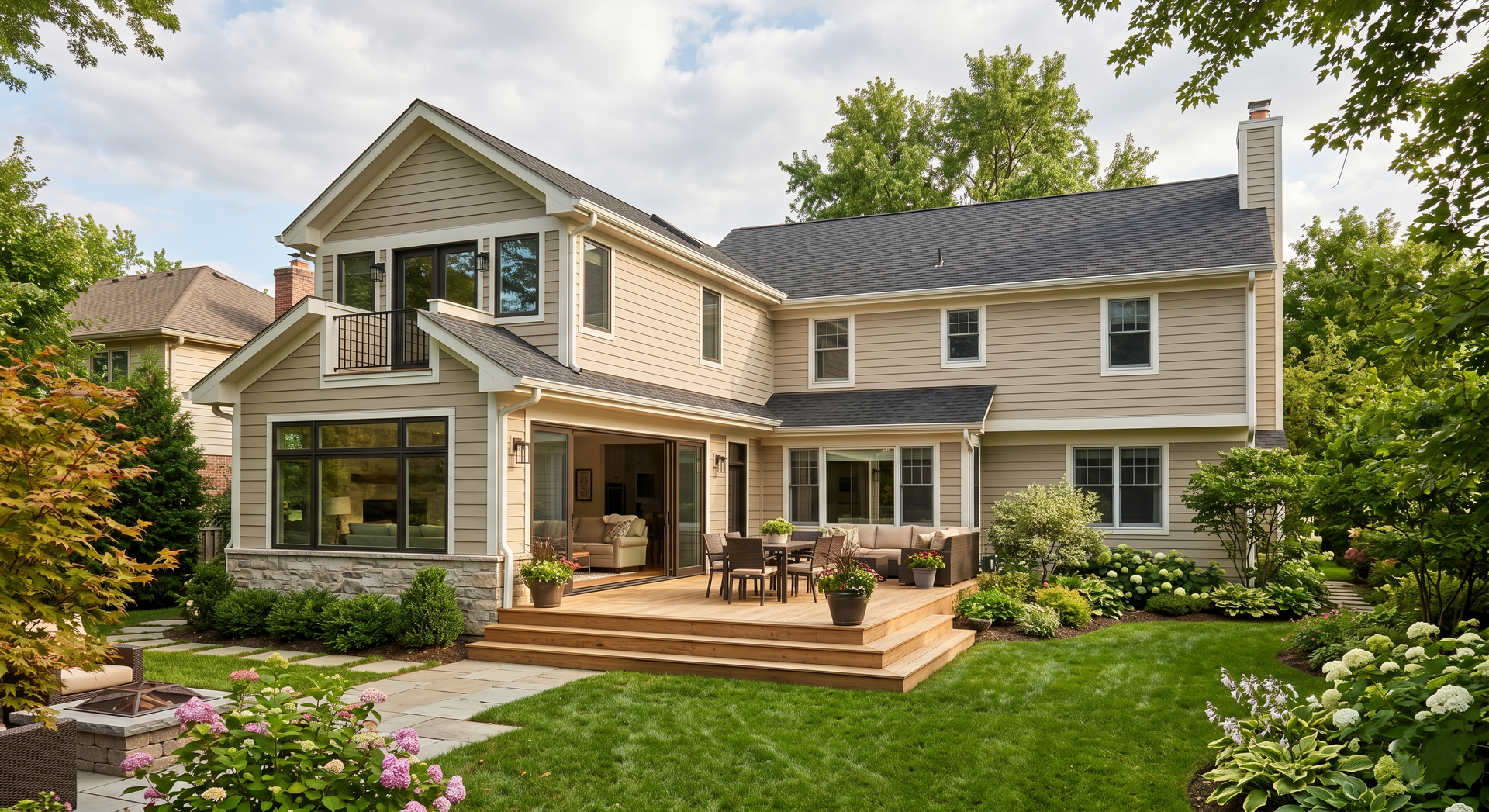
Spacious beige two-story house with a wooden deck, patio furniture, and a landscaped backyard garden
June 5, 2026
Planning a home addition in Cumming, GA? Learn the costs, design options, and benefits of expanding your home in the Atlanta area. Start planning today! Call today!

Show More